Hasta 60% de dto en el Aniversario de Buscalibre  Ver más

Enviar a
Montevideo, Montevideo
0
  • argentina
  • chile
  • colombia
  • españa
  • méxico
  • perú
  • estados unidos
  • internacional

Selecciona tu país

América

Europa

Resto del mundo

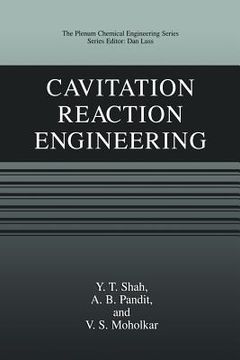
portada Cavitation Reaction Engineering (en Inglés)
Formato
Libro Físico
Editorial
Idioma
Inglés
N° páginas
352
Encuadernación
Tapa Blanda
Dimensiones
23.4x15.6x2 cm
Peso
0.53 kg.
ISBN13
9781461371687

Cavitation Reaction Engineering (en Inglés)

Y. T. Shah (Autor) · A. B. Pandit (Autor) · V. S. Moholkar (Autor) · Springer · Tapa Blanda

Cavitation Reaction Engineering (en Inglés) - Shah, Y. T. ; Pandit, A. B. ; Moholkar, V. S.

Libro Nuevo Importado
Envío: 15 a 21 días háb.
$ 20.819$ 10.409
-50%
Costos de importación incluídos en el precio ✅
Libro Nuevo

Quedan más de 100 unidades

$ 10.409
Llega entre el 09 Sep y el 17 Sep a Montevideo, Montevideo. Seleccionar ubicación

Reseña del libro "Cavitation Reaction Engineering (en Inglés)"

The literature on cavitation chemistry is ripe with conjectures, possibilities, heuris- tic arguments, and intelligent guesses. The chemical effects of cavitation have been explained by means of many theories, consisting of empirical constants, adjustable parameters, and the like. The chemists working with cavitation chemistry agree that the phenomenon is very complex and system specific. Mathematicians and physi- cists have offered partial solutions to the observed phenomena on the basis of cavitation parameters, whereas chemists have attempted explanations based on the modes of reaction and the detection of intermediate chemical species. Nevertheless, no one has been able to formulate a unified theme, however crude, for its effects on the basis of the known parameters, such as cavitation and transient chemistry involving extremely high temperatures of nanosecond durations. When one surveys the literature on cavitation-assisted reactions, it is clear that the approach so far has been "Edisonian" in nature. While a large number of reactions have showed either enhanced yields or reduced reaction times, many reactions have remained unaffected in the presence of cavitation. The success or failure of cavitation reactions ultimately depends on the collapse of the cavity. Cavitation chemistry is based on the principles of the formation of small transient cavities, their growth and implosion, which produce chemical reactions caused by the generation of extreme pressures and temperatures and a high degree of micro- turbulence.

Opiniones del libro

Preguntas frecuentes sobre el libro

Todos los libros de nuestro catálogo son Originales.
El libro está escrito en Inglés.
La encuadernación de esta edición es Tapa Blanda.

Preguntas y respuestas sobre el libro

¿Tienes una pregunta sobre el libro? Inicia sesión para poder agregar tu propia pregunta.

Opiniones sobre Buscalibre

Ver más opiniones de clientes