Happy Weekend de hasta 50% de dto y envío rápido  Ver más

Enviar a
Montevideo, Montevideo
0
  • argentina
  • chile
  • colombia
  • españa
  • méxico
  • perú
  • estados unidos
  • internacional

Selecciona tu país

América

Europa

Resto del mundo

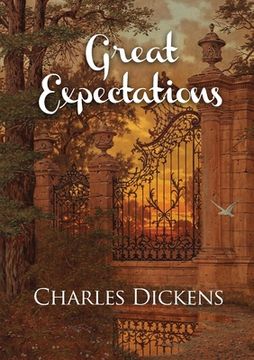
portada Great expectations: The thirteenth novel by Charles Dickens and his penultimate completed novel (en Inglés)
Formato
Libro Físico
Idioma
Inglés
N° páginas
400
Encuadernación
Tapa Blanda
Dimensiones
21.0 x 14.8 x 2.3 cm
Peso
0.52 kg.
ISBN13
9782382742501

Great expectations: The thirteenth novel by Charles Dickens and his penultimate completed novel (en Inglés)

Charles Dickens (Autor) · Les Prairies Numeriques · Tapa Blanda

Great expectations: The thirteenth novel by Charles Dickens and his penultimate completed novel (en Inglés) - Charles Dickens

Libro Nuevo Importado
Envío: 19 a 26 días háb.
$ 2.250$ 1.125
-50%
Costos de importación incluídos en el precio ✅
Libro Nuevo

Quedan 50 unidades

$ 1.125
Llega entre el 16 Jul y el 27 Jul a Montevideo, Montevideo. Seleccionar ubicación

Reseña del libro "Great expectations: The thirteenth novel by Charles Dickens and his penultimate completed novel (en Inglés)"

Great Expectations is Charles Dickens's thirteenth novel. It is his second novel, after David Copperfield, to be fully narrated in the first person. Great Expectations is a bildungsroman, or a coming-of-age novel, and it is a classic work of Victorian literature. It depicts the growth and personal development of an orphan named Pip. The novel was first published in serial form in Dickens's weekly periodical All the Year Round, from 1 December 1860 to August 1861. In October 1861, Chapman and Hall published the novel in three volumes. Dickens originally intended Great Expectations to be twice as long, but constraints imposed by the management of All the Year Round limited the novel's length. The novel is collected and dense, with a conciseness unusual for Dickens. According to G. K. Chesterton, Dickens penned Great Expectations in "the afternoon of [his] life and fame." It was the penultimate novel Dickens completed, preceding Our Mutual Friend. It is set among the marshes of Kent and in London in the early to mid-1800s. The novel contains some of Dickens most memorable scenes, including its opening, in a graveyard, when the young orphan Pip is accosted by the escaped convict, Abel Magwitch. Great Expectations is a graphic book, full of extreme imagery, poverty, prison ships ("the hulks"), barriers and chains, and fights to the death. Upon its release, Thomas Carlyle spoke of "All that Pip's nonsense." Later, George Bernard Shaw praised the novel as "All of one piece and consistently truthfull." Dickens felt Great Expectations was his best work, calling it "a very fine idea," and was very sensitive to compliments from his friends: "Bulwer, who has been, as I think you know, extraordinarily taken by the book." Great Expectations has a colourful cast that has entered popular culture: the capricious Miss Havisham, the cold and beautiful Estella, Joe the kind and generous blacksmith, the dry and sycophantic Uncle Pumblechook, Mr. Jaggers, Wemmick with his dual personality, and the eloquent and wise friend, Herbert Pocket. Throughout the narrative, typical Dickensian themes emerge: wealth and poverty, love and rejection, and the eventual triumph of good over evil. Great Expectations has become very popular and is now taught as a classic in many English classes. It has been translated into many languages and adapted many times in film and other media.
Charles Dickens
  (Autor)
Ver Página del Autor
Charles Dickens (7 de febrero de 1812 - 9 de junio de 1870) nació en Portsmouth y era el primogénito varón de un funcionario de la Armada Real. A los doce años, el encarcelamiento de su padre por deudas lo obligó a ponerse a trabajar en una fábrica de betún. Su educación fue irregular: aprendió por su cuenta taquigrafía, trabajó como ayudante en el bufete de un abogado y finalmente fue corresponsal parlamentario del Morning Chronicle.

De familia humilde, el "bueno de Carlos" no recibió educación formal hasta los nueve años, siendo muy juzgado por la crítica de la época al considerar que Dickens era demasiado autodidacta. Su vida daría un giro inesperado con el encarcelamiento de su padre por las deudas, trasladándose su familia a vivir con él a la cárcel, permitido en ese momento por las leyes británicas. A la edad de 12 años ya es considerado apto para comenzar a trabajar en una fábrica de tintes. A pesar de que la situación de su familia había mejorado, su madre puso su empeño en que siguiera trabajando allí, inspirándole a escribir una de sus obras cumbre, David Copperfield.

Sus artículos, luego recogidos en Escenas de la vida de Londres por «Boz» (1836-1837), tuvieron gran éxito y, con la aparición en 1837 de Los papeles póstumos del Club Pickwick, Dickens se convirtió en un auténtico fenómeno editorial. Novelas como Oliver Twist (1837-1839), Nicholas Nickleby (1838-1839) o Barnaby Rudge (1841) alcanzaron enorme popularidad, así como algunas crónicas de viajes, como Estampas de Italia (1846). Con Dombey e hijo (1846-1848) inició su época de madurez, de la que son buenos ejemplos David Copperfield (1849-1850), su primera novela en primera persona y su favorita, en la que desarrolló algunos episodios autobiográficos; La Casa lúgubre (1852-1853); La pequeña Dorrit (1855-1857), Historia de dos ciudades (1859), Grandes esperanzas (1860-1861) y Nuestro amigo común (1864-1865). Murió en Gad's Hill, su casa de campo en Higham, en el condado de Kent.
Ver más
Ver menos

Opiniones del libro

Preguntas frecuentes sobre el libro

Todos los libros de nuestro catálogo son Originales.
El libro está escrito en Inglés.
La encuadernación de esta edición es Tapa Blanda.

Preguntas y respuestas sobre el libro

¿Tienes una pregunta sobre el libro? Inicia sesión para poder agregar tu propia pregunta.

Opiniones sobre Buscalibre

Ver más opiniones de clientes